This past week, I found myself at APIsec conference 2026, a conference I heartily recommend for API builders in general and API security responsibles in particular. This year was a buzzing hive of innovation and rapid-fire AI revelations. The air crackled with new ideas, groundbreaking advancements, and the palpable excitement of a future being built in real-time. As I listened to the talks, a familiar, unsettling feeling began to creep in. It wasn't just that the pace was frenetic, incredibly fast, even for someone who tries to keep up. It was a deeper, more profound sensation: the world was moving on, and I was being gently, but relentlessly, pushed out.
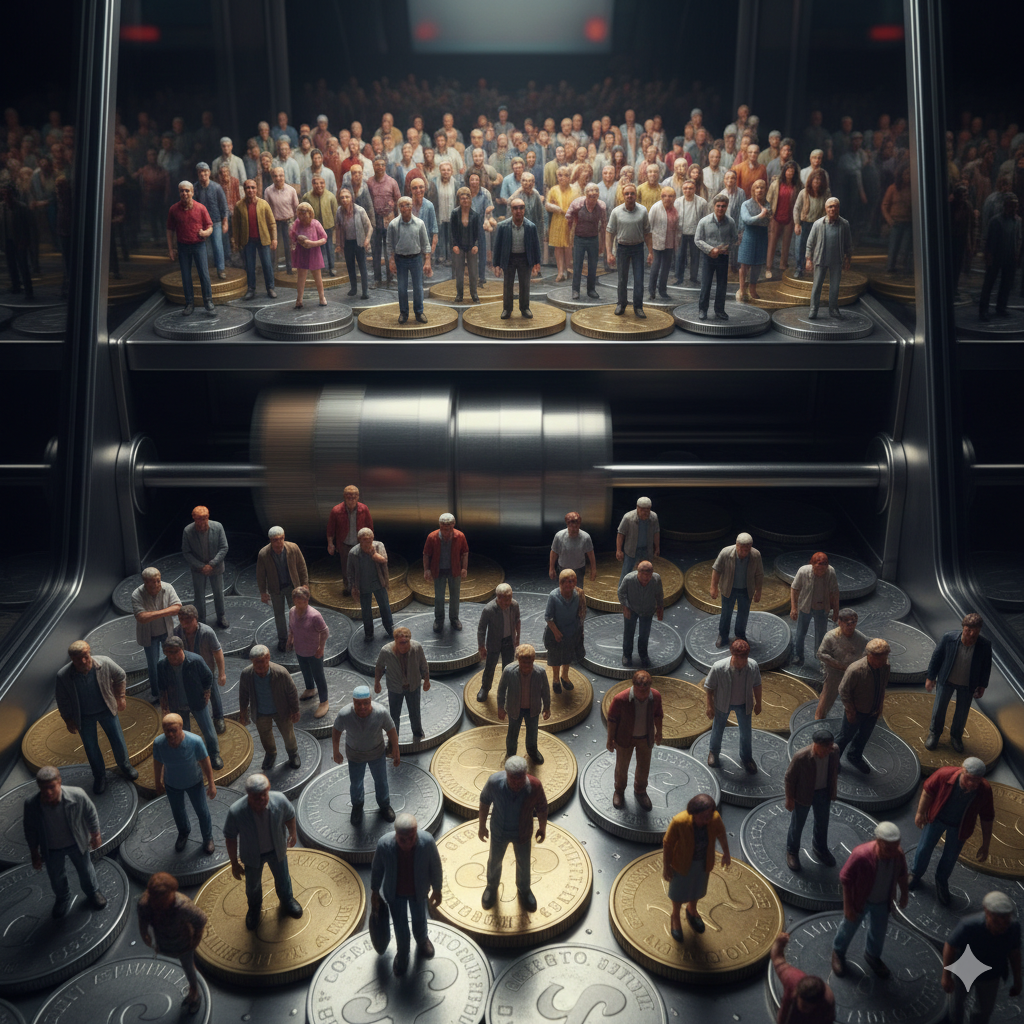
It's a feeling I've come to associate with a vivid, recurring image in my mind – that of a giant arcade coin pusher machine. You know the ones: where a shelf full of coins slowly inches forward, pushed by a mechanical arm, until some of them tumble over the edge, creating a satisfying cascade and hopefully, a jackpot.

In my mental metaphor, however, the coins aren't inanimate currency; they're people. We are all on that platform, and the relentless march of time, technology, and societal advancement is the mechanical arm, pushing us forward.
As we get older, the world seems to accelerate its pace, widening the gap between what we know and what is becoming. Every day, the lexicon changes, new paradigms emerge, and the familiar ground shifts beneath our feet. We know less of what is happening, understand even less of what the changes truly mean, yet these changes fully affect us. The once-stable landscape of our careers, our social interactions, even our understanding of basic functionality, begins to erode. We are getting closer and closer to the edge, where the familiar drops away into the unknown.
In this human coin pusher, the front of the platform is often occupied by the older generations, those who have seen countless waves of change, and are now perhaps weary from the constant adaptation. They are the ones feeling the most immediate and profound force of the push, their accumulated knowledge sometimes deemed less relevant by the shiny new coins appearing further back on the platform. Their experiences, while rich and invaluable, can feel devalued in a world obsessed with the next big thing.
But it's not just age that determines your position. Sadly, the cruel logic of the coin pusher also means that some younger people find themselves pushed to the front prematurely. Perhaps it's an industry that became obsolete, a skill set no longer in demand, or simply an unfortunate turn of economic events. They, too, experience the jarring sensation of being rendered obsolete, even as their peers further back on the platform seem to be thriving in the new currents. The front edge of the coin pusher isn't exclusively for the old; it's for anyone caught in the wrong place at the wrong time, anyone who hasn't managed to adapt or find a new foothold.
The AI conference hammered this metaphor home. The sheer velocity of progress in artificial intelligence felt like the mechanical arm speeding up, its push becoming more insistent. New tools, new concepts, new ethical dilemmas – each presentation was another nudge forward, another reminder that the landscape of knowledge is being redefined at an unprecedented rate. My initial thought was one of frantic catch-up, a desperate attempt to grasp every new acronym and understand every algorithm. But then came the deeper realization: it's not just about keeping pace; it's about acknowledging the possibility of being pushed out, regardless of how hard you try.
This isn't a lament against progress, nor a call to halt the relentless march of innovation. It's an observation, a shared human experience in an ever-evolving world, nothing new. The coin pusher of life is a constant. The platforms will always move, new coins will always be introduced, and some will always reach the edge. Perhaps the true challenge isn't to avoid the edge, but to enjoy the mere existence of the game. An idea that has always felt comfortable to me, Absurdism, the philosophy championed by Albert Camus. Camus argued that there is a fundamental conflict between the human longing for order and meaning and the "silent," chaotic indifference of the universe.
Watching the coin pusher of society, we realize the machine doesn't care about our experience, our history, or our efforts to stay on the ledge. The push is indifferent. To look at the rapid, confusing advancements of the world and feel "pushed out" is to come face-to-face with the Absurd.
So, what do we do when we feel that inexorable nudge toward the edge?
Camus suggested that we shouldn't despair or retreat into false hope. Instead, we should live in defiant rebellion. We recognize that the machine will eventually push us over, but we continue to think, to create, and to observe the game with a wink. We find joy in the silver reflection of the coins and the hum of the motor, even as we move toward the drop.
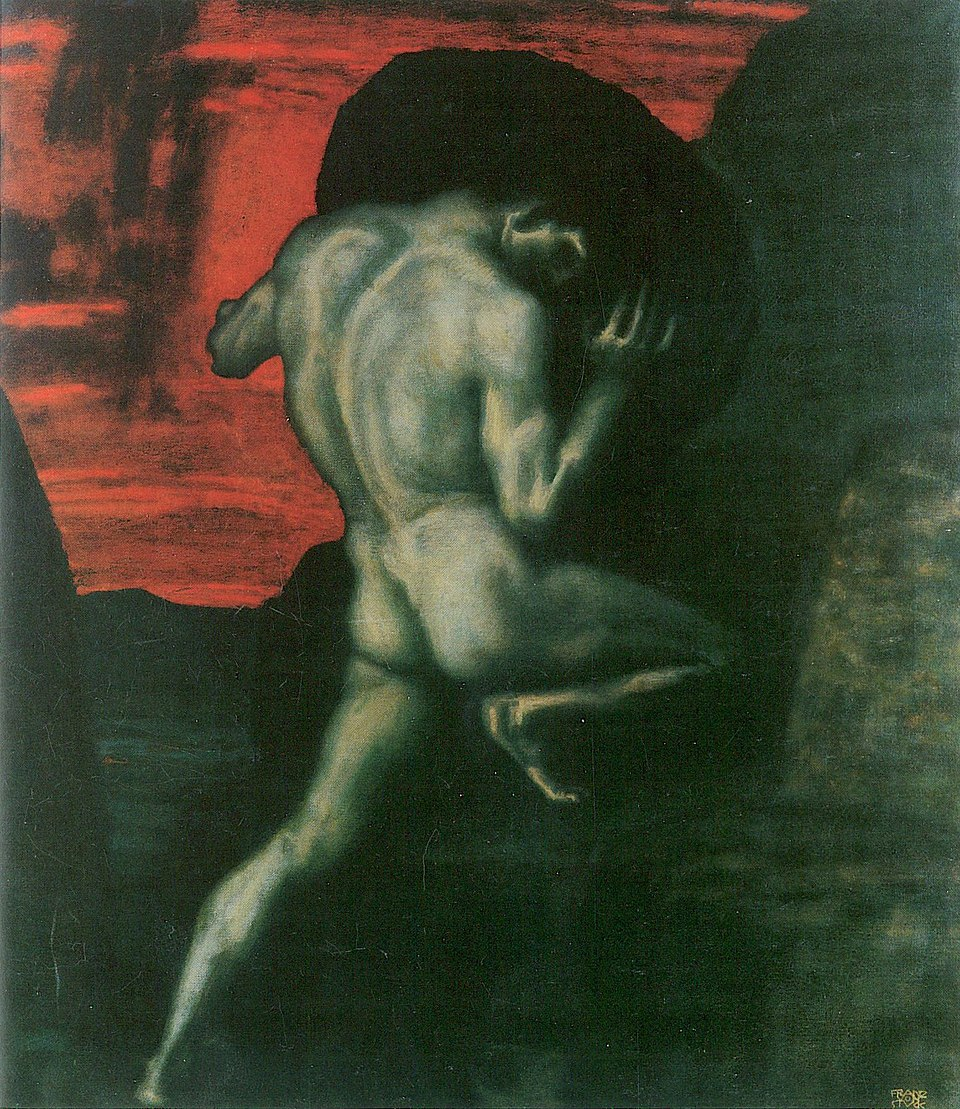
Perhaps the true challenge isn't to avoid the edge, but to walk toward it with our eyes wide open. We may be getting pushed out of the world’s current "wave," but there is a strange, quiet freedom in acknowledging the ledge. As Camus famously concluded in The Myth of Sisyphus, as his protagonist watched his rock roll back down the hill for the thousandth time: "One must imagine Sisyphus happy." Even on the edge of the coin pusher, we can be happy—not because the machine stopped, but because it no longer has the power to surprise us.